Ukraine House, Washington DC
Mykola Zhuravel – a master of Levkas
It takes a true artistic mindset to invent new art using traditional artform. For Picasso, it was African tribal masks and Pre-Roman Iberian sculptures that led him to deconstruct objects into muted, fragmented facets that became known as cubism. For Archipenko, it was “Scythian Warriors” - stone sculptures from Ukrainian steppes - that inspired his use of voids and concaves in sculpture. For Alexis Gritchenko, it was Byzantine iconography and icons that allowed him to explore color and movement, and eventually develop his Avant-Garde “Dynamokolir” (dynamics of color) style.
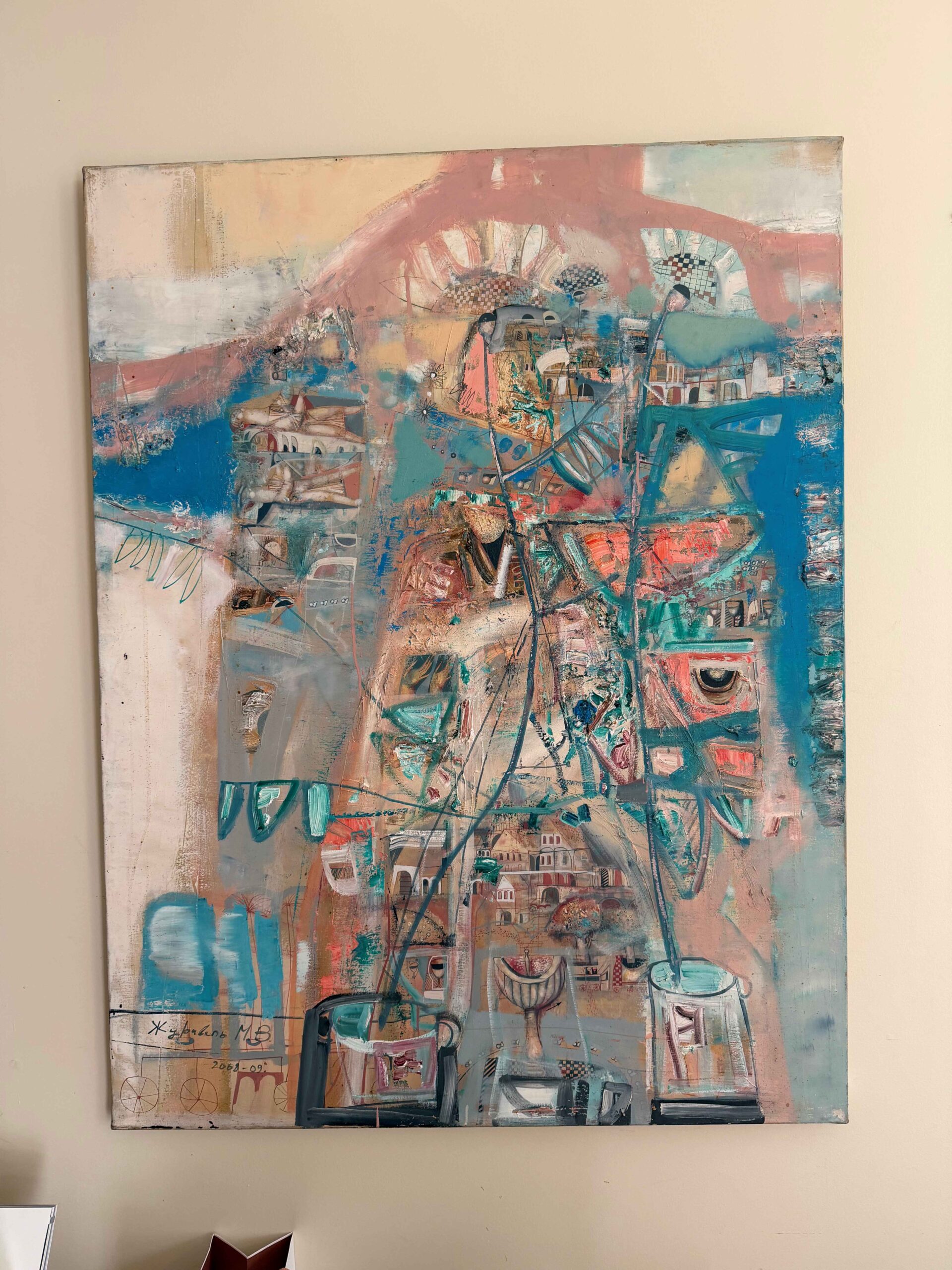
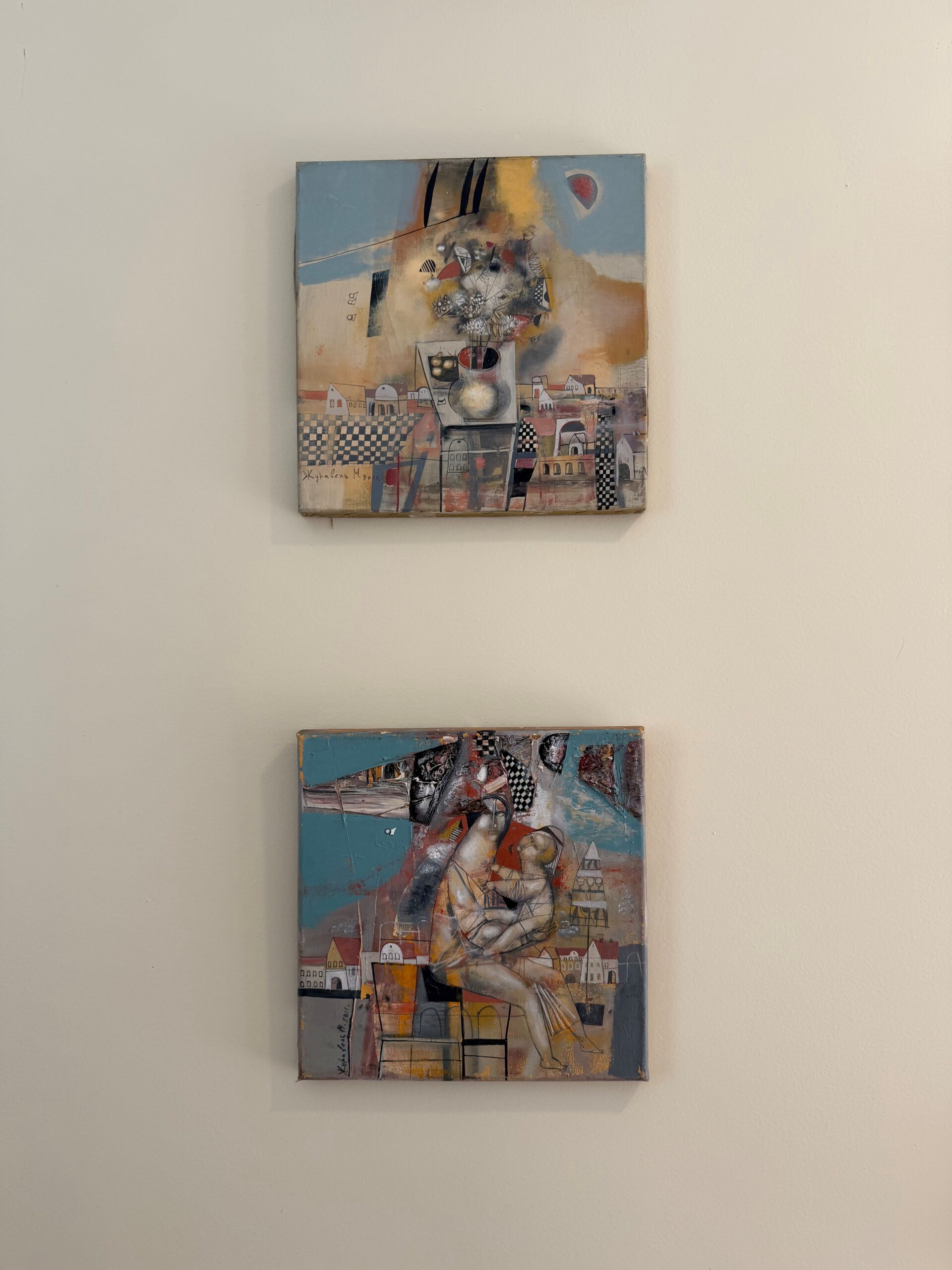
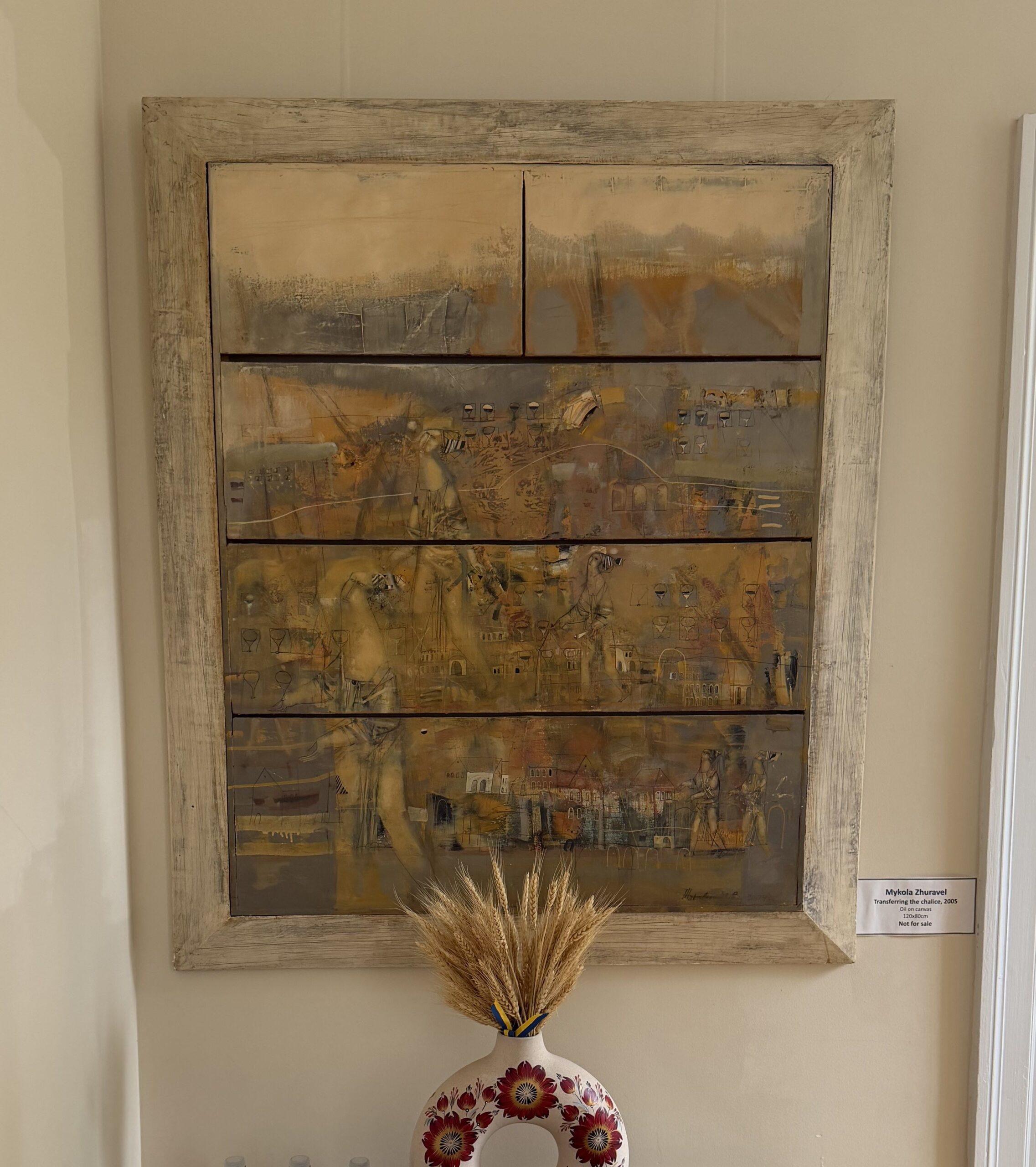
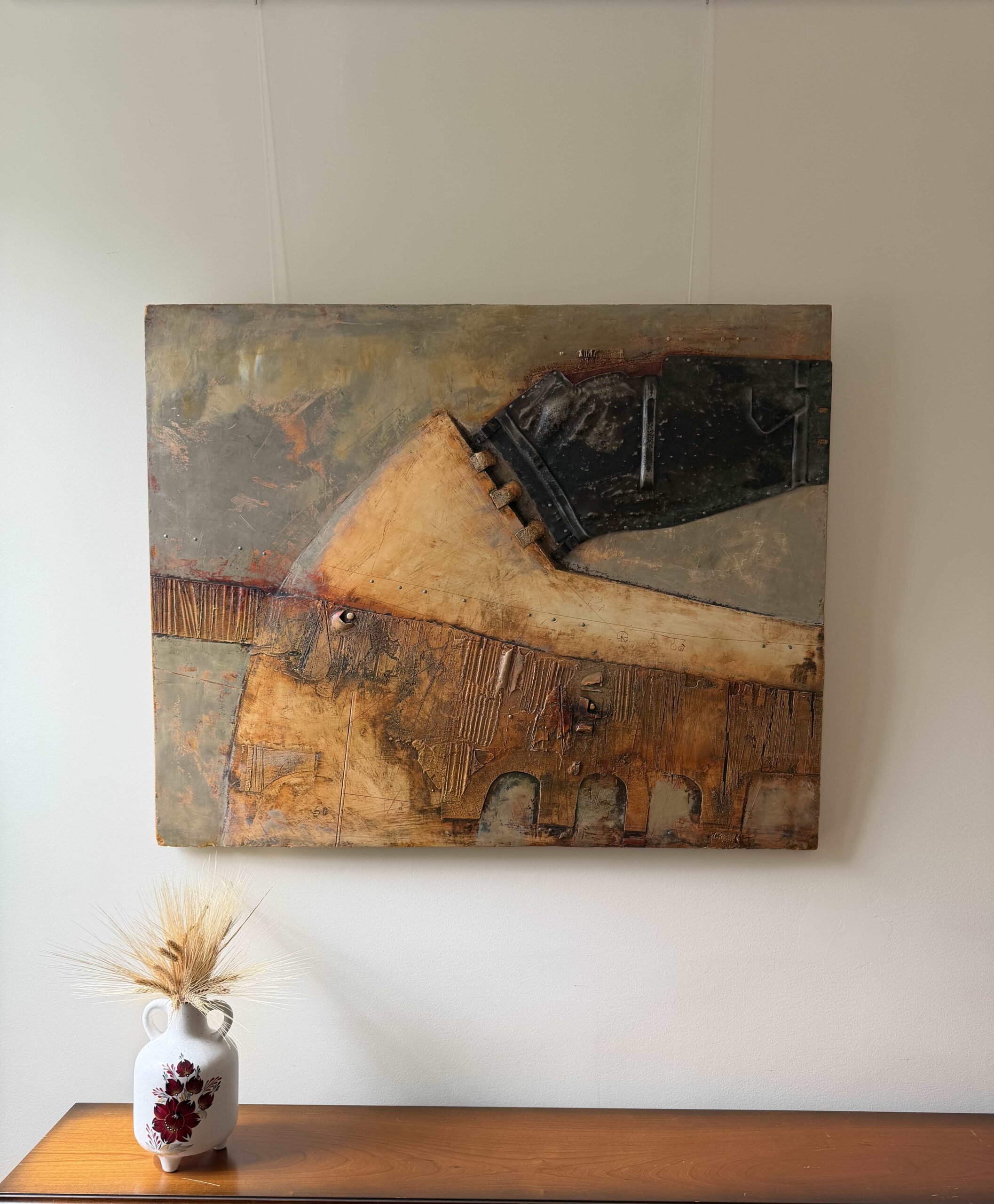
Mykola Zhuravel used the traditional icon-painting technique “Levkas” to develop a unique artform that stands out in its authenticity and uniqueness.
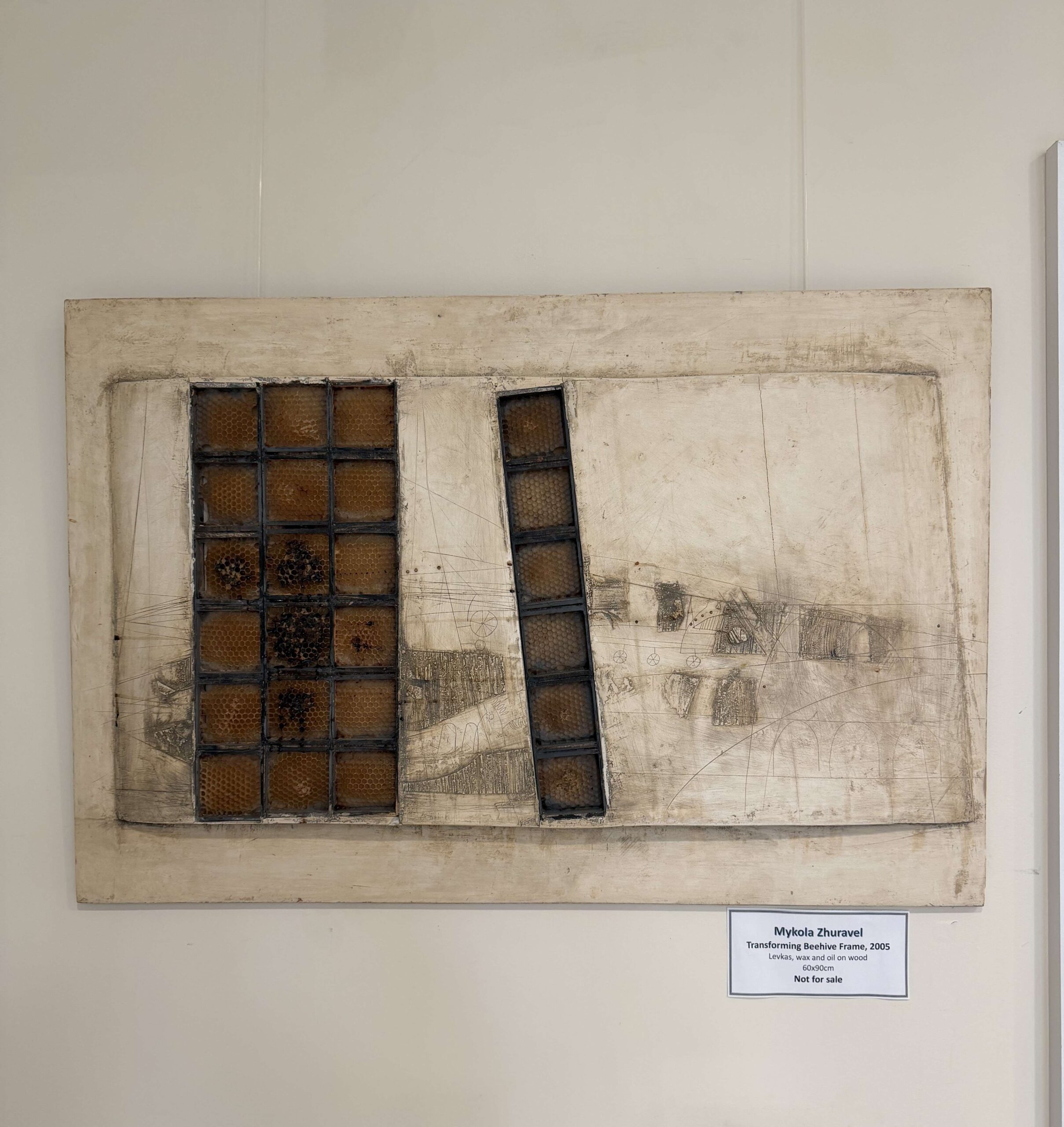
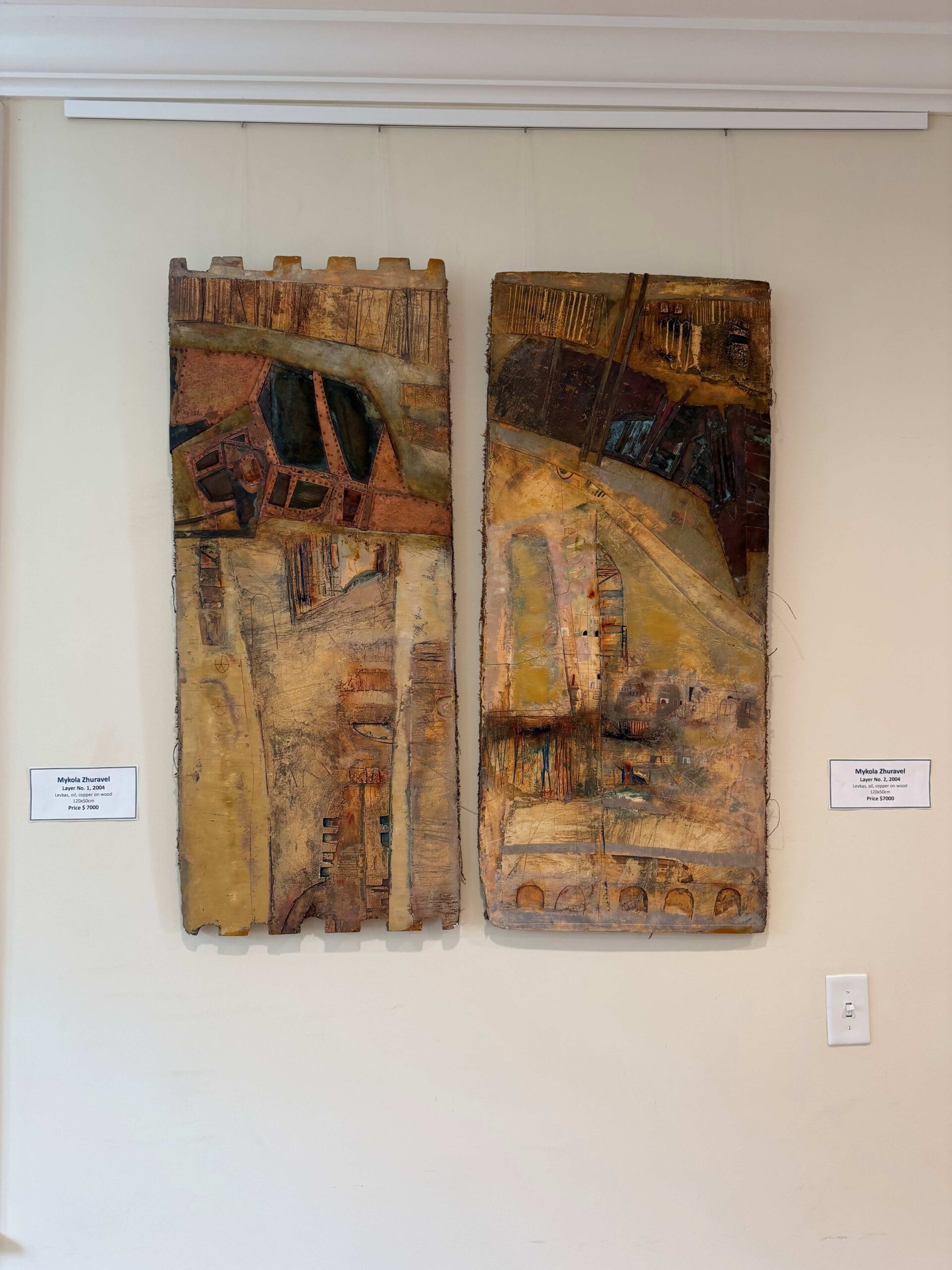
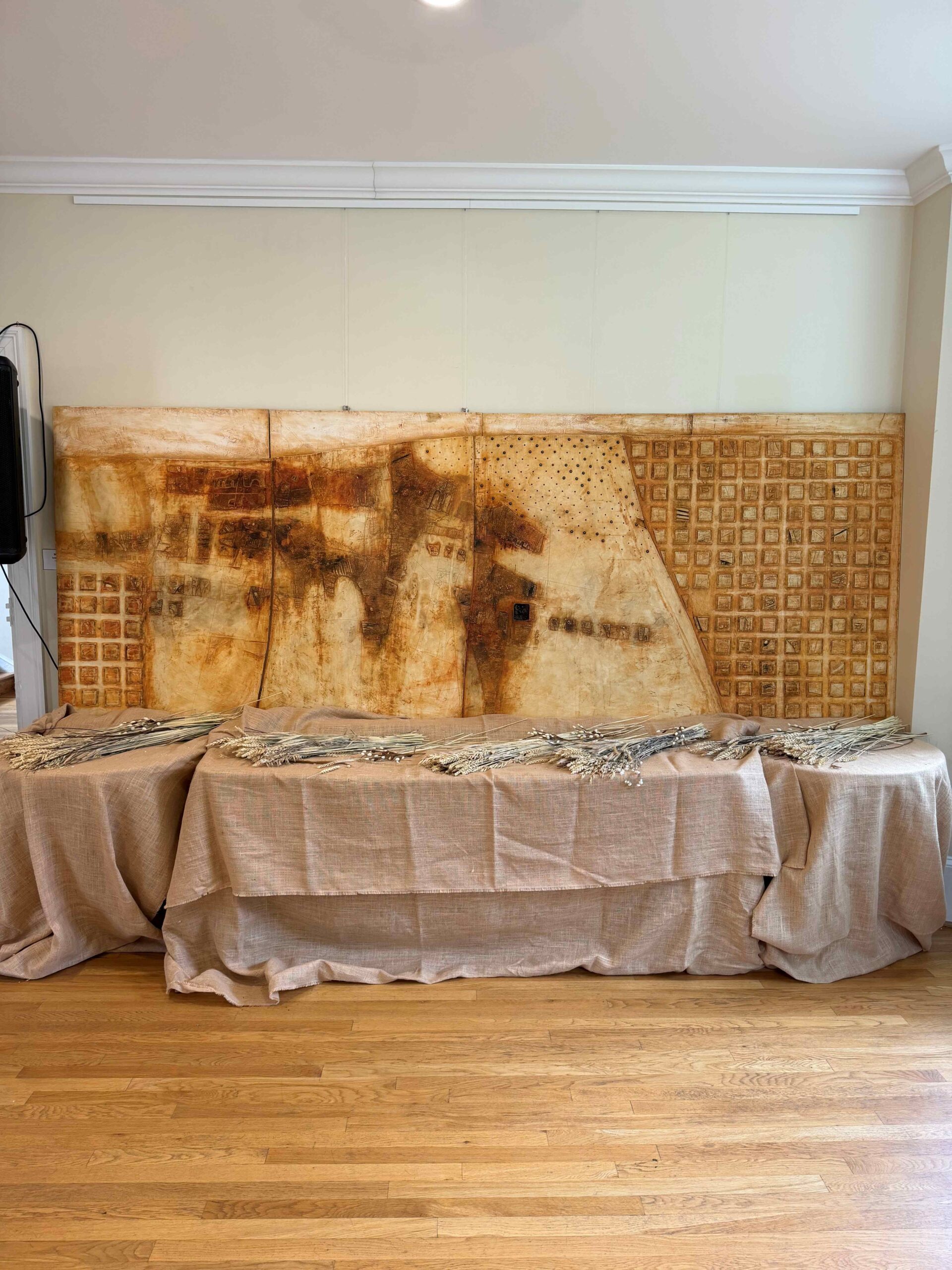
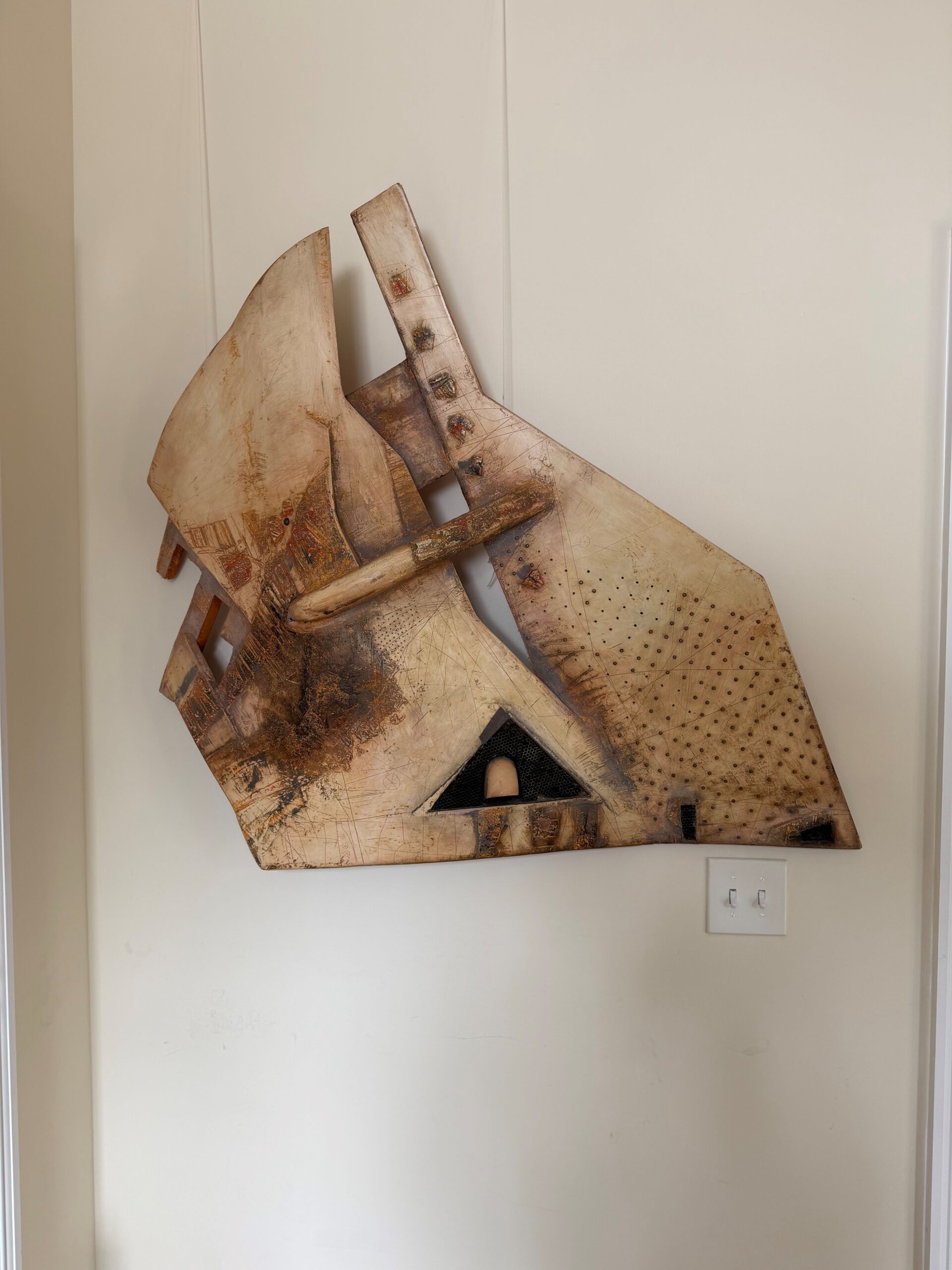
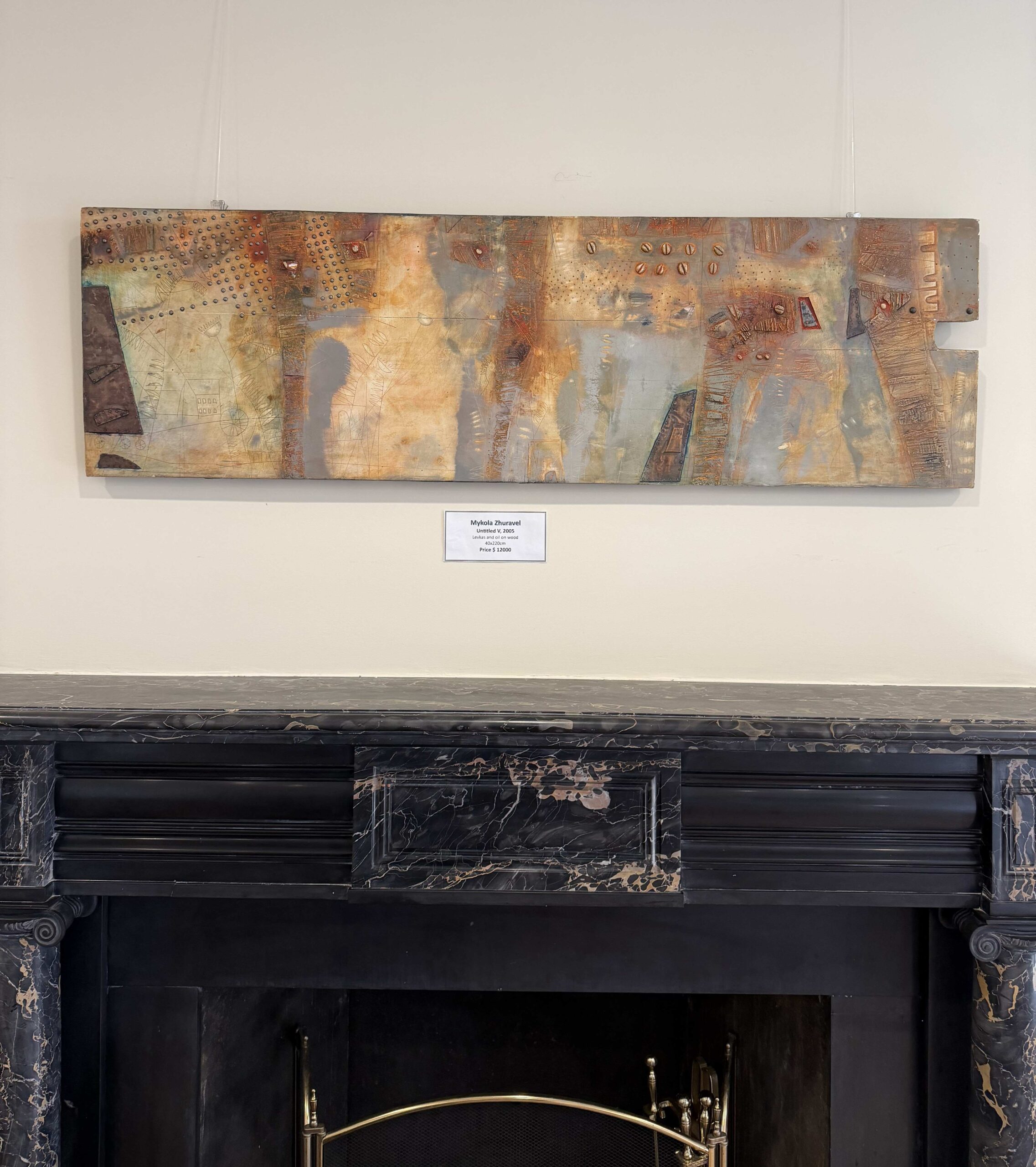
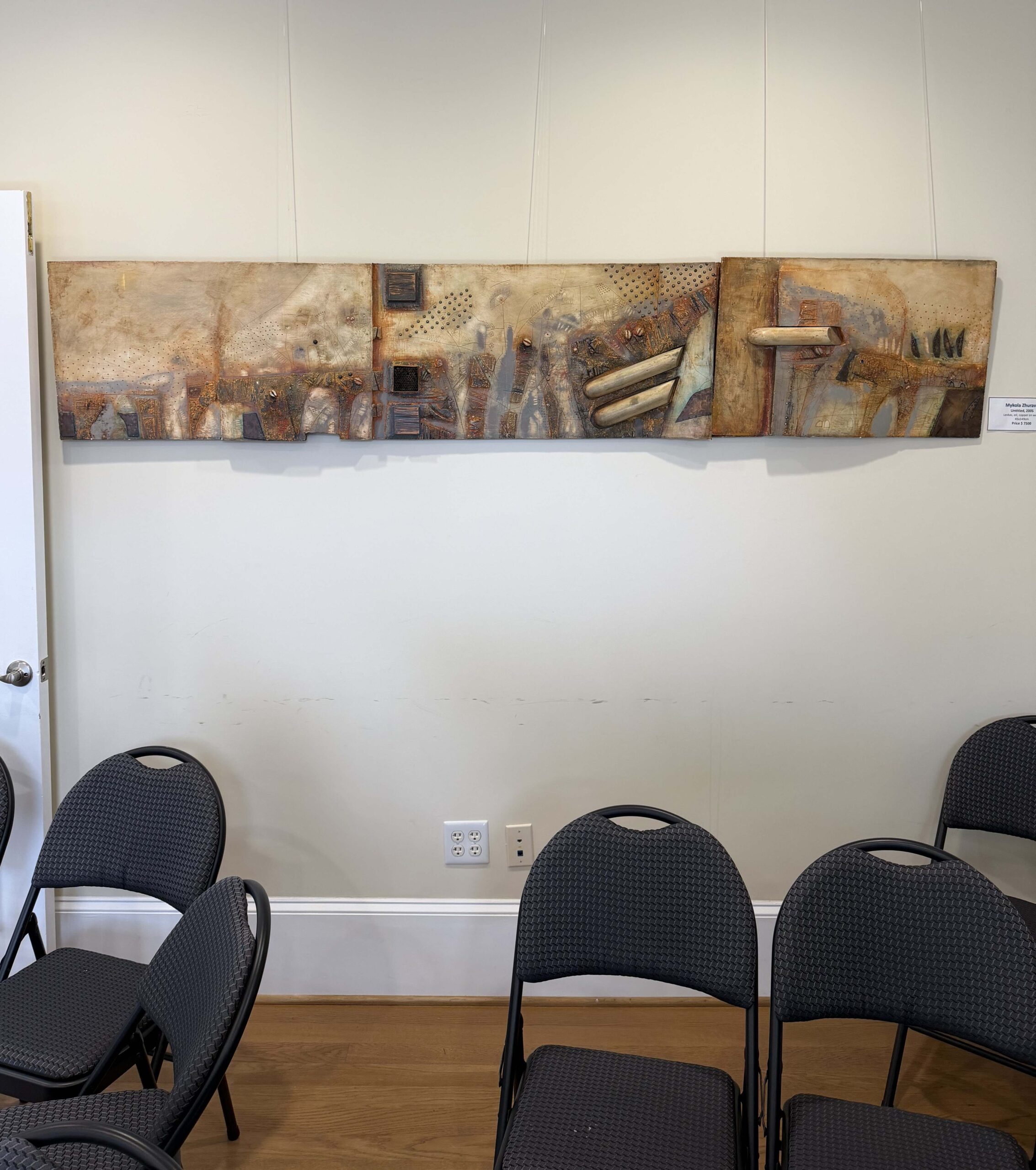
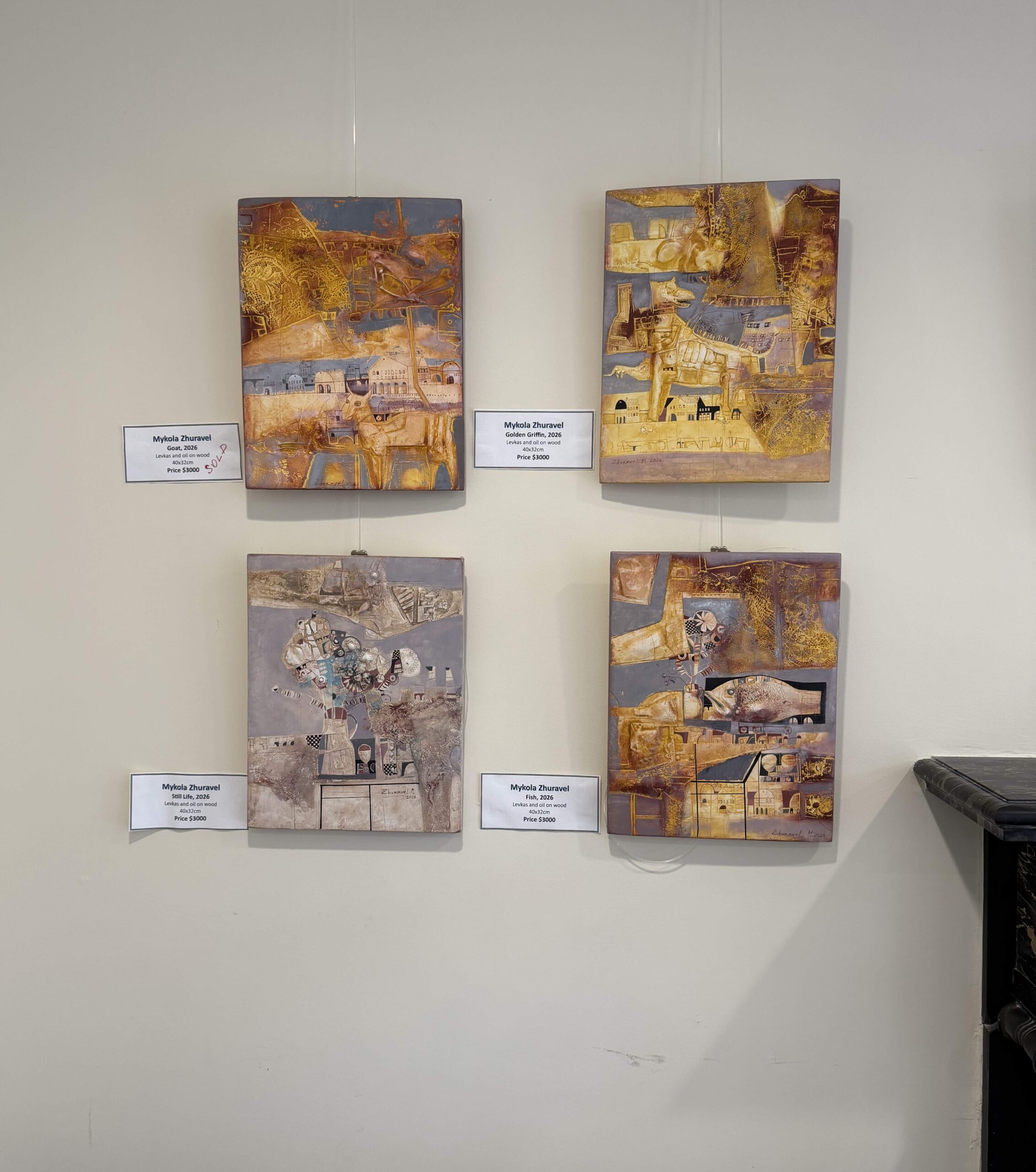
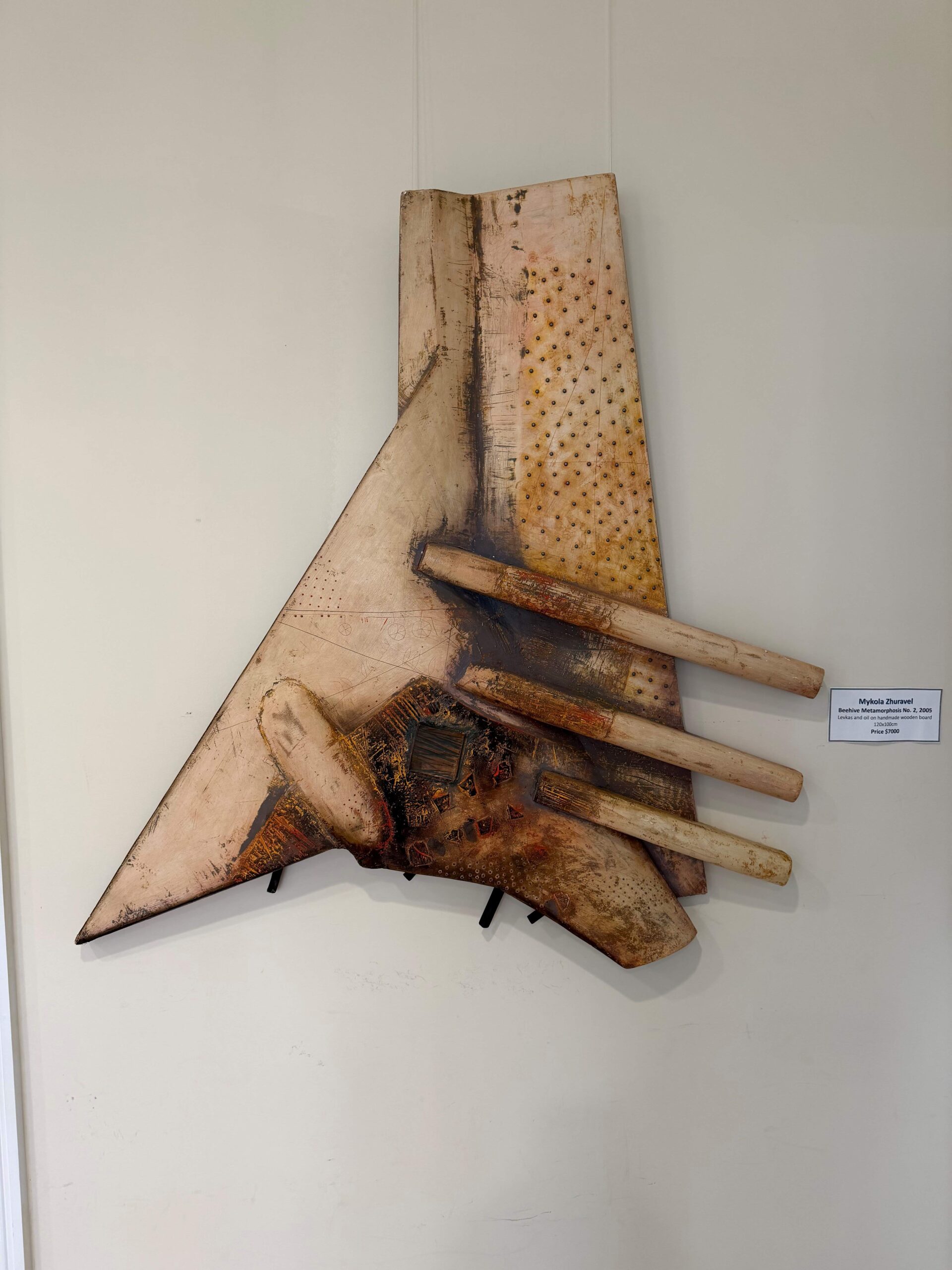
Levkas (or gesso) is a traditional, highly durable substrate used in icon painting to prepare wooden panels. It is a mix of chalk and animal-based glue applied in multiple layers to create a surface for painting an icon. It is an interim step required for starting work on a traditional Byzantine Icon. For Mykola Zhuravel it became a medium he started using to “carve” intricate objects, rhythmical patterns and figures that evolved into fully accomplished compositions.
By experimenting with Levkas as a medium, Zhuravel developed a new approach to painting, similar to Rauschenberg’s ”Combines.” Zhuravel used a visual language of delicate, calligraphic jotting and when combined with a depth of Levkas, the compositions resulted in contemporary bas-reliefs. His aesthetics are reminiscent of nature, with works entitled, “Sea hunting”, “Beehive”, “Beehive Metamorphosis”, “Solar”, “Transforming beehive frame into stratum”, and “Transferring beehive”.
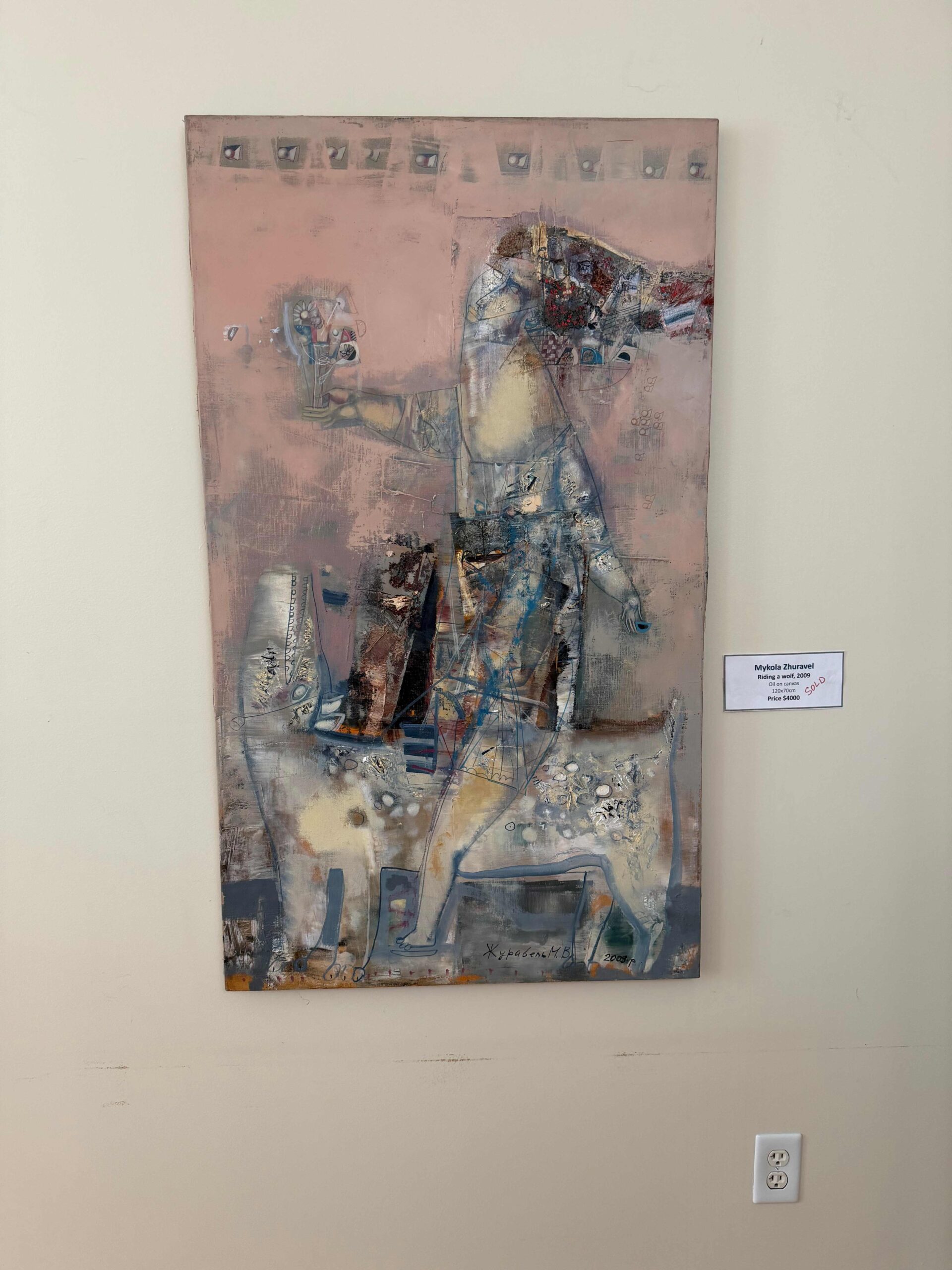
Created in warm, earthly, honey-inspired tones, 21 works on exhibit at Ukraine House in Washington, DC provide an immersive experience for the viewer. One forgets about physical features of the interior such as doors, lights, piano or decorative items and falls under the spell of abstract forms, compositions and colors, where everything around the viewer is dominated by aesthetics created by Zhuravel. This exhibition reflects on the “Apiary” project, yet highlights an artform and a visual phenomenon that Zhuravel coined – contemporary levkas.
About the artist
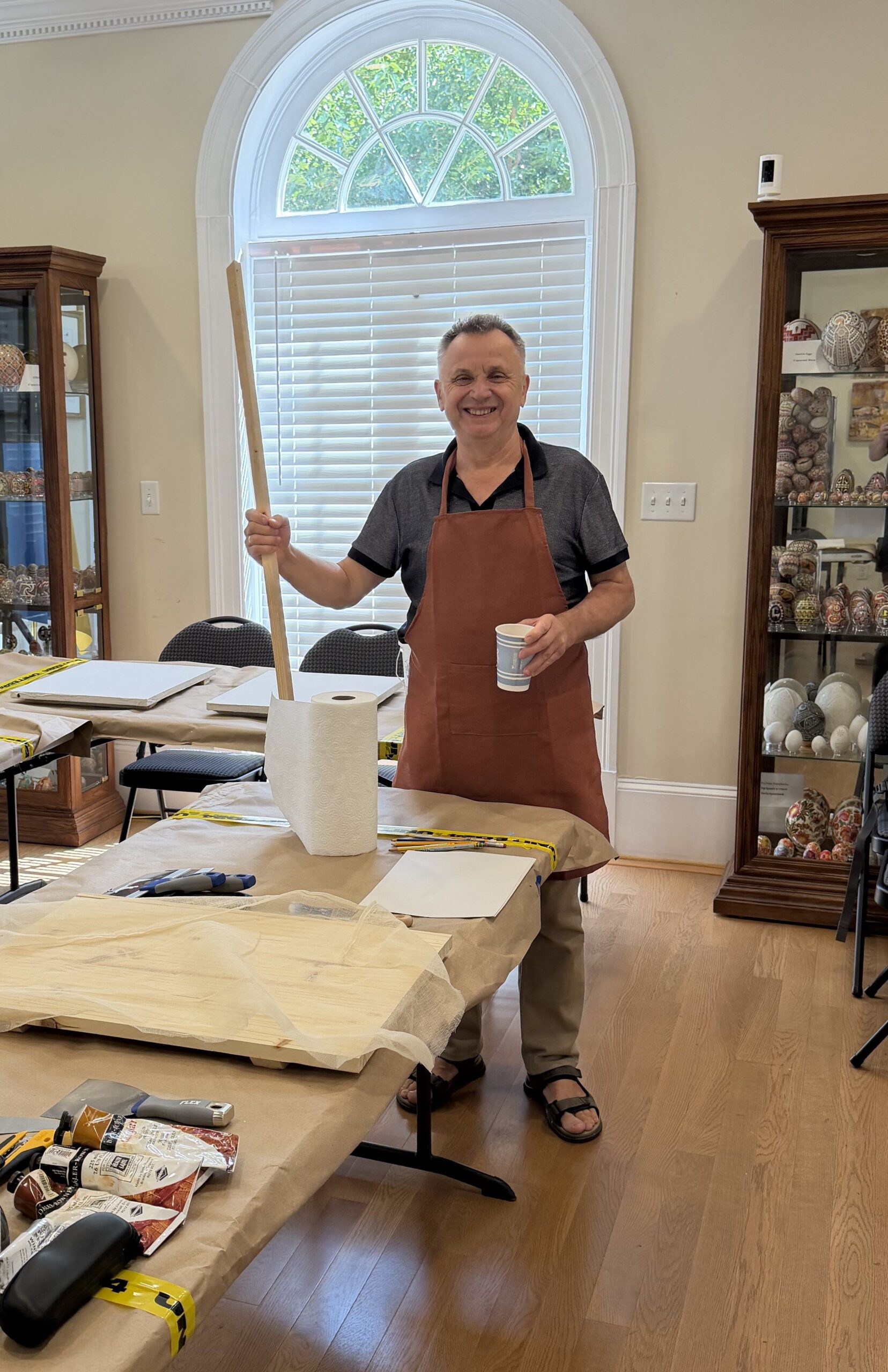
Mykola Zhuravel is a professionally trained Ukrainian artist who left Ukraine immediately after Russia launched full-scale war on Ukraine in February of 2022. He settled with his wife and young son in Toronto where he presently lives and maintains his art studio.
Zhuravel held his first museum exhibition in Canada in 2024 at Two Rivers Gallery, Prince George, British Columbia, Canada - a prestigious public institution that features rotating exhibitions, educational programs, and a permanent collection focusing on Northern and Western Canadian art. It is operated by the non-profit Prince George Regional Art Gallery Association.
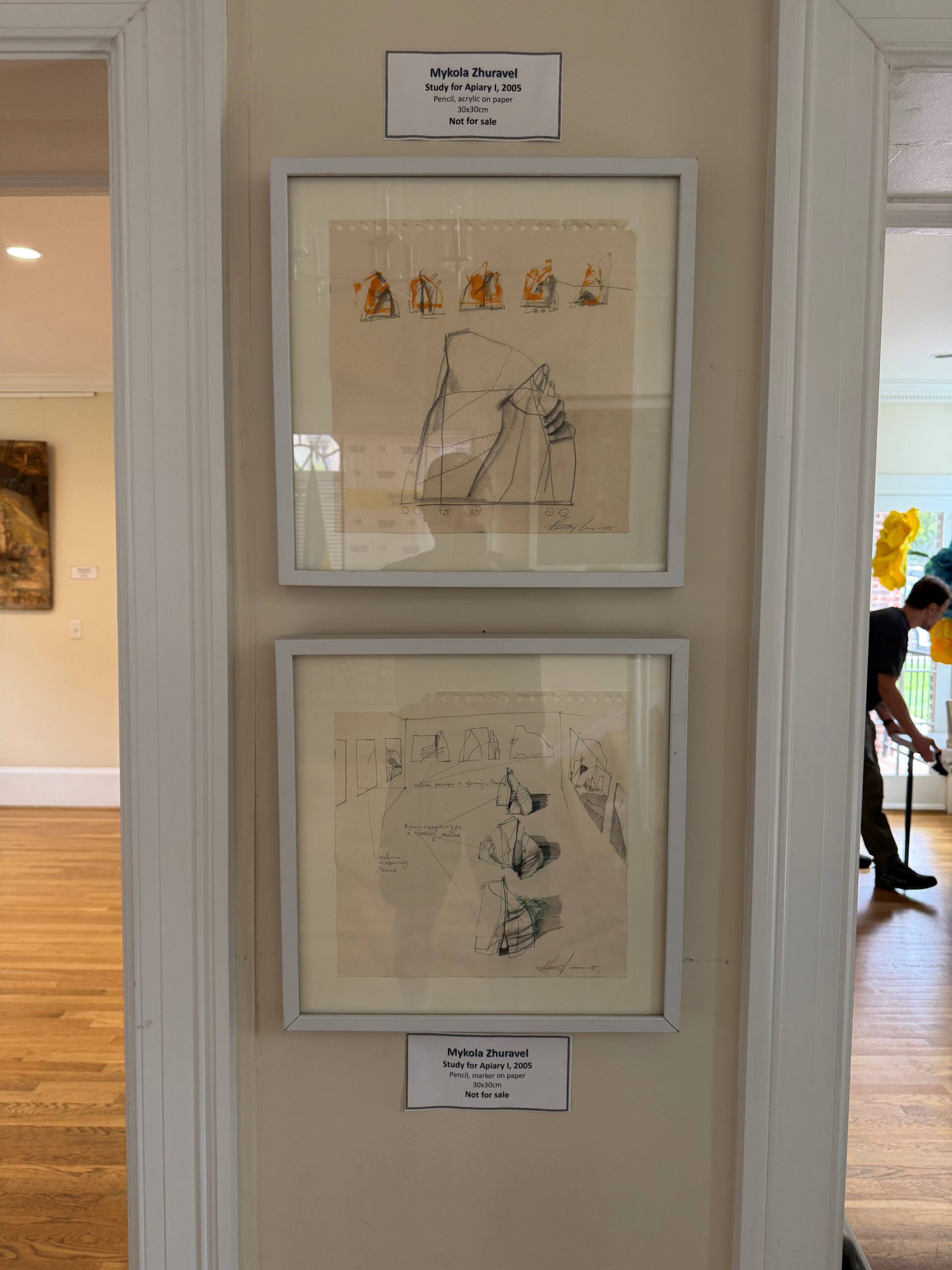
Zhuravel exhibited extensively prior to moving to Canada. His most comprehensive exhibition featuring four projects - “Trans-sphere”, “Aggressive Beekeeping”, “Apiary” and “Conservation of the Mist” - was held at the Ukrainian Institute of America in 2004. From there, Zhuravel focused on the “Apiary” project, transforming beehives and the life of bees into a series of wood-levkas sculpture-paintings. Bee cells are presented in static square forms and bees are shown as dynamic circles and points. The combination of the two reconfirms the constructive life of the conceptual beehive. Zhuravel continued developing works for his “Apiary” project and held an important exhibition at Zorya Fine Art Gallery in Greenwich, CT that was accompanied by a catalogue and a documentary film. Professor Sam Hunter, art historian at Princeton University and formerly associate curator at the Museum of Modern Art in New York wrote a foreword for the catalogue. “Apiary” was also presented at the 54th Venice Biennale in 2011.